
Introduction
Witnessing someone having an epileptic seizure can be a frightening experience, especially if you’re unprepared or unfamiliar with what to do. But knowing how to help someone with epileptic seizures can make a huge difference in keeping them safe and offering the right support. Epilepsy is a neurological disorder that affects millions of people worldwide, and learning the correct steps to assist someone during a seizure is critical. This blog will provide detailed guidance on how to help someone with epileptic seizures, ensuring that you can take immediate and effective action when needed.
Moreover, if you or a loved one is seeking spiritual and emotional healing, Vogim Deliverance Ministry offers a path to relief through prayer and deliverance. You can submit a healing request through this link: Vogim Deliverance Ministry Healing Request.
Table of Contents
- Understanding Epileptic Seizures
- Types of Epileptic Seizures
- How to Help Someone with Epileptic Seizures: General Steps
- How to Help Someone with Different Types of Seizures
- Common Myths about Helping Someone with Epileptic Seizures
- What Not to Do During a Seizure
- When to Seek Medical Help
- Spiritual Healing and Support at Vogim Deliverance Ministry
- Final Thoughts
1. Understanding Epileptic Seizures
Before learning how to help someone with epileptic seizures, it’s crucial to understand what a seizure is. Epilepsy is a chronic condition characterized by recurrent, unprovoked seizures. A seizure happens when there is an abnormal burst of electrical activity in the brain, temporarily disrupting the way it normally functions. Depending on the type of seizure, the person may experience a range of symptoms, from mild confusion to full-body convulsions.
Knowing how to help someone with epileptic seizures requires recognizing that each person’s experience with epilepsy can vary, but having a general understanding of the condition will better equip you to offer assistance.
2. Types of Epileptic Seizures
Understanding the different types of seizures is an important part of knowing how to help someone with epileptic seizures. There are two main categories:
- Generalized Seizures: These affect both sides of the brain and often result in loss of consciousness. Common examples include tonic-clonic seizures (formerly known as grand mal seizures) and absence seizures.
- Focal Seizures: Also known as partial seizures, these affect only one part of the brain. A person may remain aware during a focal seizure or lose consciousness if it spreads.
Each type of seizure requires a slightly different approach when offering help, so it’s essential to know the distinctions.
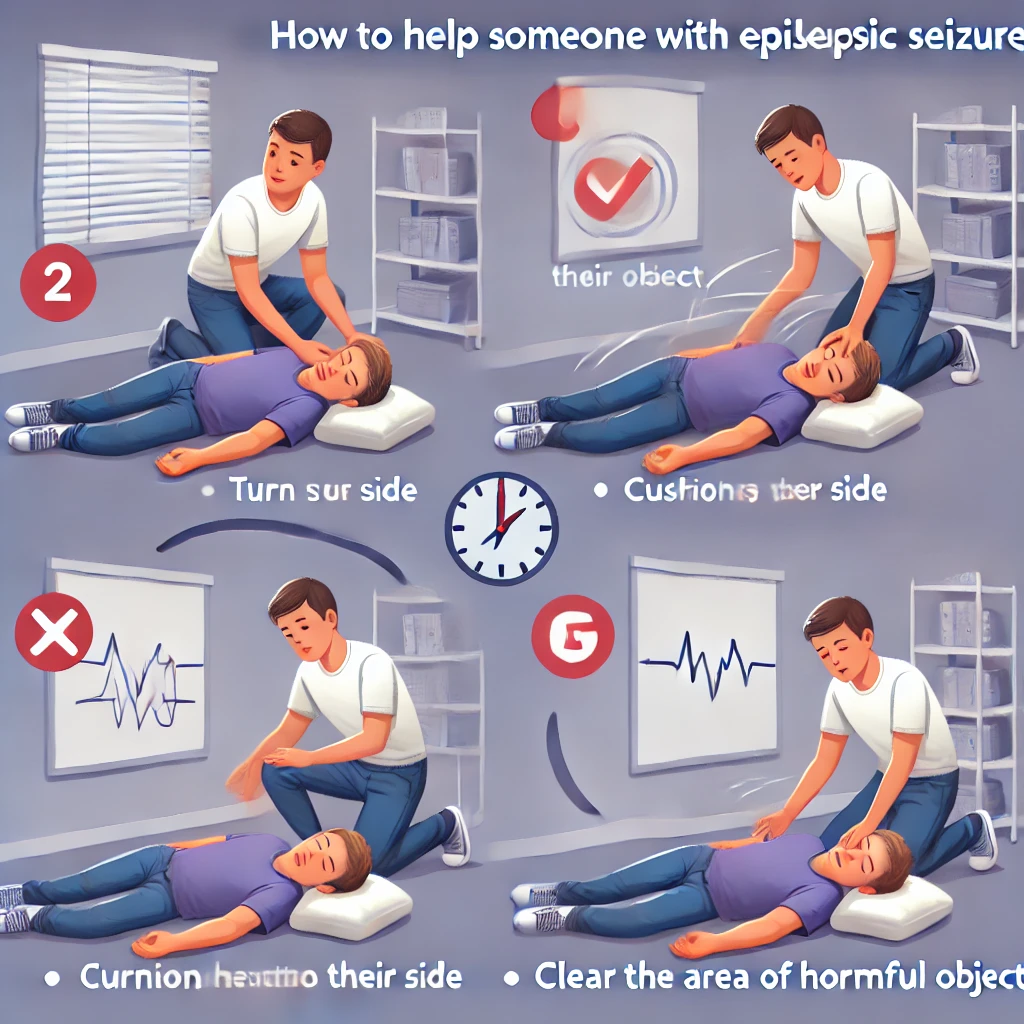
3. How to Help Someone with Epileptic Seizures: General Steps
Regardless of the type of seizure, the most important thing to remember is to stay calm and provide as much safety and comfort as possible. Here are general steps for how to help someone with epileptic seizures:
- Stay Calm: Your calmness can help ease the situation for others who may be present and also help the person experiencing the seizure.
- Time the Seizure: Use a stopwatch or clock to time how long the seizure lasts. Most seizures stop within a few minutes, but if it lasts longer than five minutes, you should seek medical assistance.
- Clear the Area: Remove any dangerous objects or furniture that the person might bump into or hurt themselves on.
- Cushion Their Head: If they’ve fallen, place something soft like a jacket or cushion under their head to prevent head injuries.
- Turn Them on Their Side: Once the seizure ends or during a convulsive seizure, gently turn the person onto their side to help keep their airway clear and allow saliva or vomit to drain from the mouth.
- Stay with Them: Stay by their side until they are fully awake and aware. They may be confused or disoriented when they regain consciousness.
- Avoid Restraint: Never try to restrain the person or forcefully stop their movements during the seizure.
- No Objects in Their Mouth: Contrary to popular belief, do not place any objects in their mouth. They cannot swallow their tongue, and placing something in their mouth can cause injury.
If you or someone you know needs spiritual healing, consider reaching out to the Vogim Deliverance Ministry for prayer and support. You can contact them through this healing request link.
4. How to Help Someone with Different Types of Seizures
Different seizures require specific actions when helping someone:
Tonic-Clonic Seizures
- How to help someone with epileptic seizures during a tonic-clonic seizure involves keeping them safe while the seizure runs its course. Follow the general steps mentioned above.
Absence Seizures
- If you notice someone staring blankly for a few seconds or rapidly blinking, this may be an absence seizure. In this case, the person will typically recover quickly, and there’s not much to do besides making sure they are safe.
Focal Seizures
- How to help someone with epileptic seizures during a focal seizure can be trickier, as they may appear confused, disoriented, or engage in repetitive movements. Gently guide them away from danger and stay with them until they are fully conscious.
5. Common Myths about Helping Someone with Epileptic Seizures
There are several myths surrounding how to help someone with epileptic seizures. It’s important to dispel these misconceptions:
- Myth 1: You should put something in their mouth to prevent them from swallowing their tongue.
- Truth: Never put anything in their mouth; this can cause choking or injury.
- Myth 2: You should restrain them during a seizure.
- Truth: Restraining someone can cause harm; let the seizure pass naturally.
- Myth 3: Seizures always require immediate medical attention.
- Truth: Most seizures stop on their own within a few minutes. Only seek emergency help if the seizure lasts more than five minutes, the person has multiple seizures, or they are injured.
Understanding the facts can greatly enhance your ability to help someone with epileptic seizures in a safe and effective way.
6. What Not to Do During a Seizure
While learning how to help someone with epileptic seizures, it’s just as important to know what not to do:
- Do not restrain the person during a seizure.
- Do not put anything in their mouth.
- Do not try to perform CPR during the seizure. After it stops, you can check for breathing.
- Do not leave them alone until the seizure has ended and they are fully alert.
Taking these precautions ensures that you are providing the right support without causing additional harm.
7. When to Seek Medical Help
Knowing when to call for medical help is key to understanding how to help someone with epileptic seizures. Call emergency services if:
- The seizure lasts more than five minutes.
- The person has multiple seizures in a row.
- They have difficulty breathing or do not regain consciousness after the seizure.
- They are injured during the seizure.
- It is their first seizure.
Having clear guidelines on when to escalate the situation ensures that the person gets appropriate care when necessary.
8. Spiritual Healing and Support at Vogim Deliverance Ministry
For those who seek not only medical but also spiritual healing, Vogim Deliverance Ministry offers support through prayer and deliverance. Many people find peace and comfort through spiritual avenues, and if you or a loved one is experiencing frequent seizures, reaching out for divine intervention can offer hope and healing.
Vogim Deliverance Ministry offers a range of deliverance and healing services to help individuals struggling with epilepsy and other health conditions. You can submit a healing request through their website by following this link: Vogim Deliverance Ministry Healing Request.
9. Final Thoughts
Knowing how to help someone with epileptic seizures can save lives, reduce injuries, and provide much-needed comfort during a stressful moment. Whether it’s understanding the different types of seizures, following the right steps, or knowing what not to do, the information in this guide equips you to act quickly and effectively. Most importantly, remember that there are spiritual avenues for healing as well. If you or a loved one needs help, consider contacting Vogim Deliverance Ministry through this healing request link for spiritual support.
By following this guide, you can become a beacon of calm in moments of crisis and a source of healing through the Vogim Deliverance Ministry. Stay prepared, stay informed, and always offer help when you can.
Follow us on Facebook
Live a Reply